 O you who have Imaan! Sincerely repent to Allah.
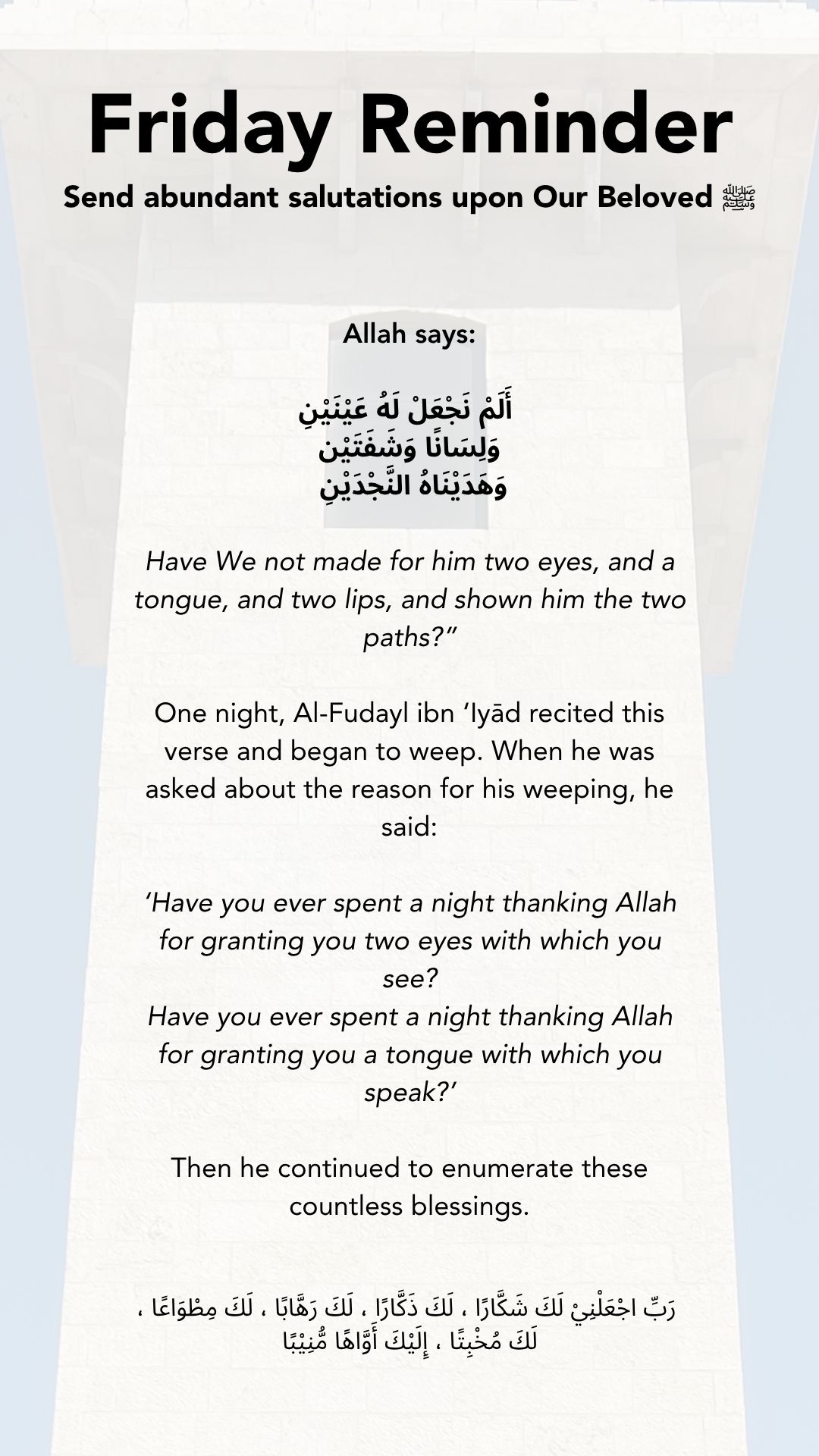
Allah ﷻ says in Sūrah al-Balad:
أَلَمْ نَجْعَل لَّهُ عَيْنَيْنِ، وَلِسَانًا وَشَفَتَيْنِ، وَهَدَيْنَاهُ النَّجْدَيْنِ
“Have We not made for him two eyes, and a tongue, and two lips, and shown him the two paths?” (Qurʾān 90:8–10)
This short passage is both a reminder and a reckoning. It draws our attention to the blessings that we often take for granted. Eyes to see, a tongue to speak, and guidance to distinguish right from wrong. All of these are signs from Allah, pointing to both His generosity and His expectation that we use these gifts with purpose.
One night, the righteous scholar Al-Fuḍayl ibn ‘Iyāḍ (رحمه الله) recited these verses and began to weep. When asked why, he said:
“Have you ever spent a night thanking Allah for granting you two eyes with which you see?
Have you ever spent a night thanking Allah for granting you a tongue with which you speak?”
Then he continued listing the endless blessings that surround us, the ones so constant that they fade into the background of our lives.
His words echo the Qur’anic truth:
وَإِن تَعُدُّوا نِعْمَتَ اللَّهِ لَا تُحْصُوهَا
“And if you were to count the favour’s of Allah, you could not enumerate them.” (Qurʾān 16:18)
Our eyes, tongue, hands, and time are among the greatest trusts (amānāh) Allah has placed in our care. Yet they are often the very blessings we use carelessly. The Prophet ﷺ said:
“نِعْمَتَانِ مَغْبُونٌ فِيهِمَا كَثِيرٌ مِنَ النَّاسِ: الصِّحَّةُ وَالْفَرَاغُ”
“There are two blessings that many people are deceived concerning: health and free time.”(Ṣaḥīḥ al-Bukhārī, 6412)
Health and time are the two things most wasted yet most missed once they are gone. The eyes that see Qurʾān today may one day dim. The tongue that recites dhikr may one day fall silent. Gratitude is not just an emotion; it is a state of mindful use.
The Prophet ﷺ advised us with timeless wisdom:
“اغْتَنِمْ خَمْسًا قَبْلَ خَمْسٍ: شَبَابَكَ قَبْلَ هَرَمِكَ، وَصِحَّتَكَ قَبْلَ سَقَمِكَ، وَغِنَاكَ قَبْلَ فَقْرِكَ، وَفَرَاغَكَ قَبْلَ شُغْلِكَ، وَحَيَاتَكَ قَبْلَ مَوْتِكَ”
“Take advantage of five before five: your youth before your old age, your health before your sickness, your wealth before your poverty, your free time before your busyness, and your life before your death.” (Reported by al-Ḥākim and al-Bayhaqī)
This ḥadīth is not only a call to action but a reminder of accountability. Each of these five is a temporary gift. They fade, they shift, and when they are gone, the only thing that remains is how we used them.
When we reflect on Al-Fuḍayl’s tears, we are reminded that gratitude (shukr) is not limited to words like “alḥamdulillāh.” True gratitude is to use Allah’s blessings in obedience to Him, to let the eyes look at what is pure, to let the tongue speak truth, and to let time be filled with remembrance.
Allah ﷻ promises:
لَئِن شَكَرْتُمْ لَأَزِيدَنَّكُمْ
“If you are grateful, I will surely increase you [in favour].” (Qur’an 14:7)
Imagine, as Al-Fuḍayl asked, spending one night simply thanking Allah, not for wealth or success, but for sight, for speech, for guidance. How often do we reflect that our ability to see a sunrise, to whisper a du‘ā’, or to recite the Qurʾān is itself an ocean of mercy?
Gratitude purifies the heart, softens the soul, and turns routine blessings into acts of worship. As one of the early scholars said:
“The one who truly knows Allah is the one who never tires of thanking Him.”
رَبِّ اجْعَلْنِيْ لَكَ شَكَّارًا ، لَكَ ذَكَّارًا ، لَكَ رَهَّابًا ، لَكَ مِطْوَاعًا ، لَكَ مُخْبِتًا ، إِلَيْكَ أَوَّاهًا مُّنِيْبًا